
I Was Letting AI Run My Business (Here's What I Changed)
AI made it easy to build more and more, until my business was a pile of half-finished bits. Here's how I stripped it back and put myself back in charge.

Jamie Clarke
5 October 2026 · 4 min read
I’ve spent years telling business owners to keep their marketing simple.
And for most of this year, my own business was anything but.
This is the honest version of what went wrong, and what I did about it.
How it got complicated
It didn’t happen all at once.
It never does.
I’d have an idea for a new offer, open up AI, and an hour later I’d have a page, a plan and a price for it, all looking finished enough that it felt like I’d actually done something.
Then another idea.
Then another.
AI never once said “hang on, do you actually need this?”
It just said yes and got on with it.
Which felt AMAZING at the time (look at all this stuff I’m building!).
But, stuff isn’t the same as progress.
By the end of the summer I had more offers than I could explain in one breath, projects that were nearly done and stuck there, and three different versions of my own voice guide sat in three different folders.
Three. Of my own voice.
(I’m meant to be the one who makes this stuff easier 🤦)
I was busy every day, but not much was actually getting put live.
Where I went wrong
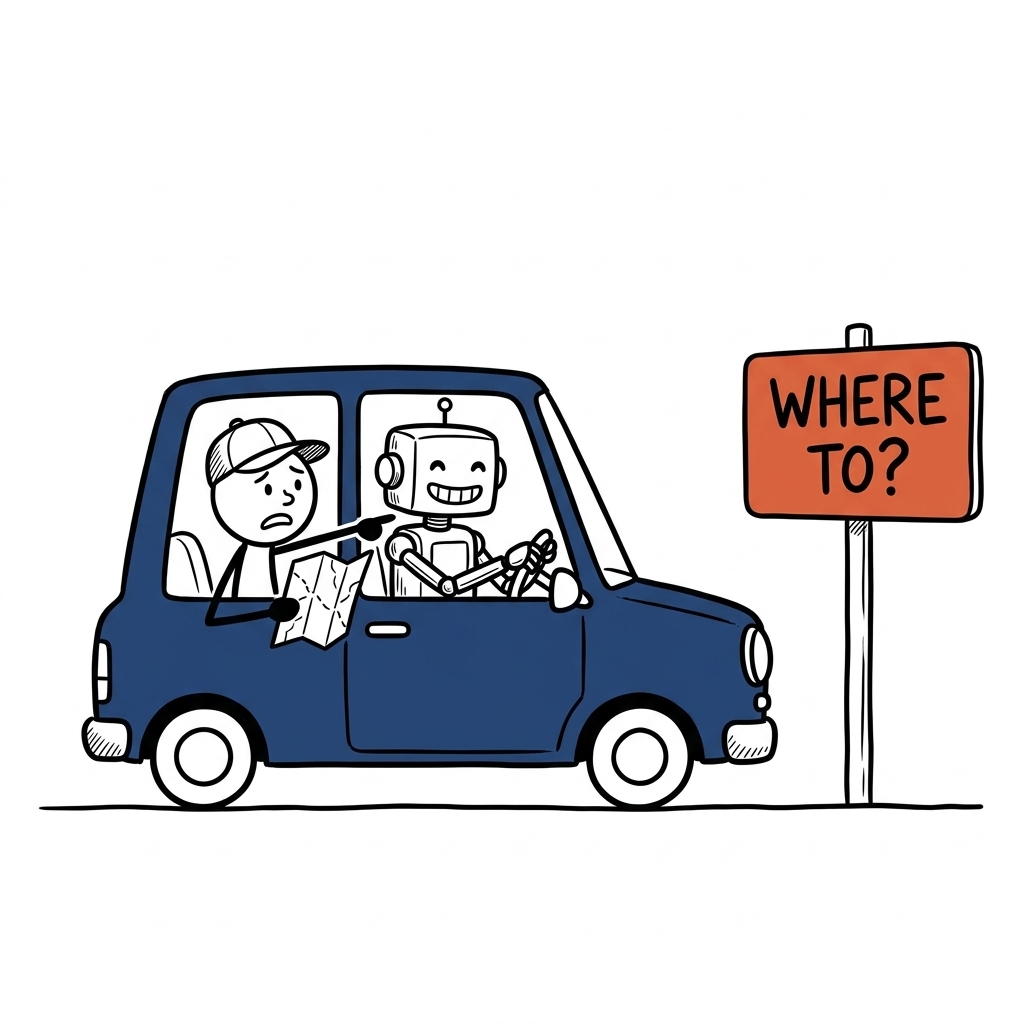
I was letting AI decide what got built.
Not on purpose.
But every time I asked it to help with something, it helped, because helping is what it does.
It doesn’t know your business.
It doesn’t know which of your ideas is the good one.
It doesn’t have to live with the mess afterwards. You do.
AI is great at doing.
It’s rubbish at deciding.
And if you hand it the deciding as well, without even noticing, you end up with a business that grows sideways instead of forwards - more bits, more pages, more half-built bridges, and nothing joined up.
What I changed
At the start of September I stopped building and started stripping back.
1. I wrote it all down, once
Who I help, what I sell and how I price it.
Then how I talk, right down to the words I’d never use.
All of it in plain English, in one place, and that one place is now the first thing AI reads before it helps me with anything, so I’m not explaining my business from scratch every time and it’s not guessing.
It’s exactly what you’d do with a new member of staff.
You wouldn’t put someone on the phones on their first morning without telling them who your customers are.
2. I decide first, then AI helps
Every week starts with me deciding what matters.
Not AI, not a to-do list someone else wrote, me.
Then AI helps me get it done faster.
AI as the assistant, me as the boss.
It sounds daft written down, it’s that obvious.
It still took me most of the year to actually do it.
3. I cut what wasn’t working
Anything that hadn’t brought in work, or wasn’t going to soon, got stopped.
Not deleted (I can’t bring myself to delete anything), just moved to one side so I don’t see it every day.
What’s left is a business I can explain in a sentence.
I make marketing easier for solopreneurs, coaches and service businesses, with the foundations and systems that keep the work coming in while you get on with the job.
It’s the same in your business
You don’t need to be using AI to have this problem.
Swap AI for a marketing agency, or that freelancer who says yes to everything, and the same thing happens.
If nobody’s deciding, the tools end up steering.
Your job today
Write down everything you’re doing for marketing right now. Every tool, every account, every half-started thing.
Put a tick next to anything that’s brought you work in the last six months.
For everything else, ask: would I start this again today? If the answer’s no, stop it.
Then, before you open ChatGPT or sign up for anything new, finish this sentence: “This week, the one thing I need is…”
Only ask for help with that.
Version one is always better than version none, and a simple version one beats a complicated version nothing every time.
Want to see where you stand?
If you’d like someone else to do the looking, that’s what Your Web Review is for. I go through your website, Google profile, reviews and socials, record a video of me talking it through, and give you the three things I’d fix first.
No big sales pitch.
And if you’d like one short email every Sunday on making your marketing easier, get the Marketing Memo. It’s free.
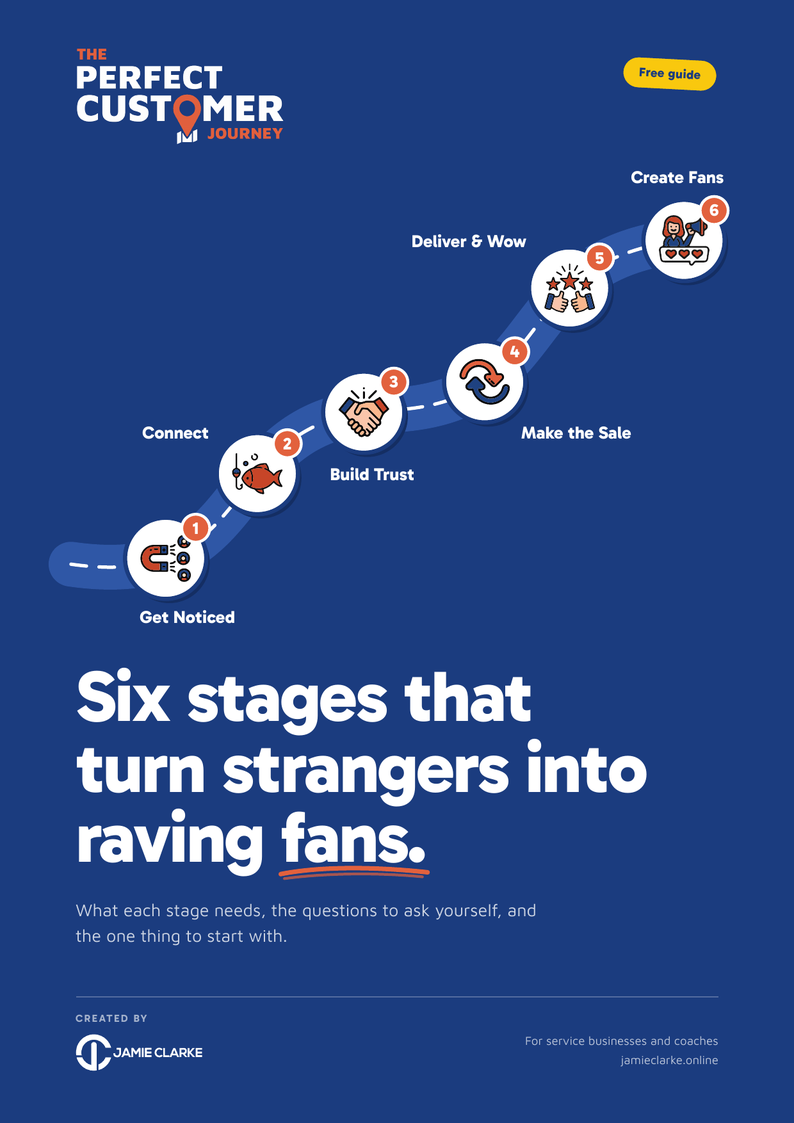
Free Guide · 14 pages
The Perfect Customer Journey: A Plain English Guide
See your whole marketing on one page, and spot the stage you're missing.
By signing up you agree to receive marketing emails. Unsubscribe anytime. Privacy policy.
It's on its way! Check your inbox in the next few minutes.
Something went wrong. Please try again.
Want me to look at yours?
I'm Jamie. I help coaches and small business owners turn their website and marketing into a steady stream of enquiries. Grab a free web review and I'll show you your quickest wins, no big sales pitch.