
Marketing Will Never Be Easy (But You Can Make It a LOT Easier)
Marketing will never be easy, but it can be a lot easier. See the picture on the lid, get the foundations right, then build one system at a time, in order.

Jamie Clarke
12 October 2026 · 6 min read
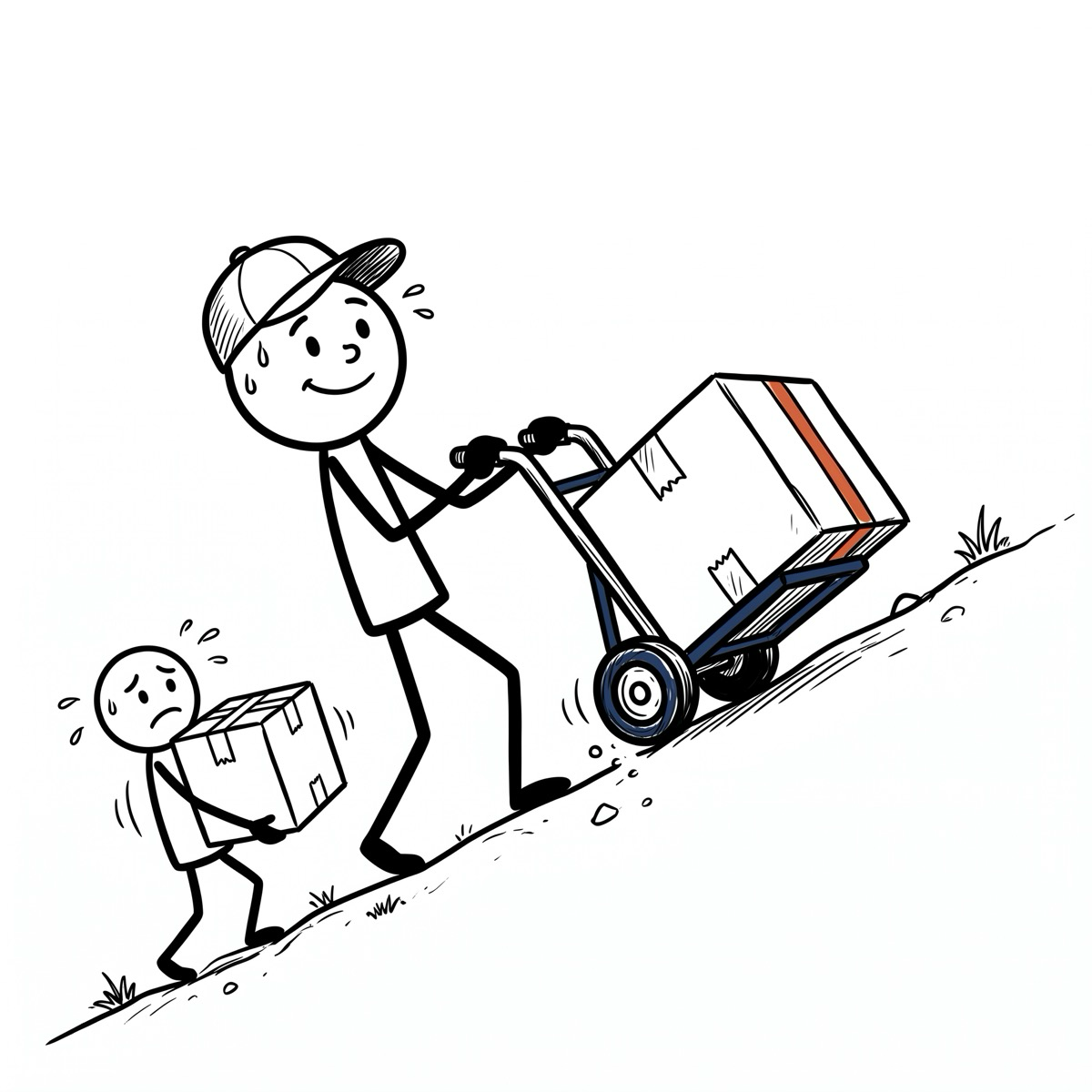
I’ve been doing this since 2009, and I’m not going to sit here and tell you marketing is easy.
It’s not.
Anyone who tells you otherwise is selling something.
It takes work, it takes showing up when you don’t feel like it, and it takes doing the boring stuff nobody ever sees.
But, it can be a hell of a lot easier than it feels right now.
And the difference between “impossible” and “manageable” usually comes down to one thing…
…knowing the order.
The jigsaw without the lid
You’re not bad at marketing.
Nobody ever showed you how it all fits together, that’s all.
So you do what anyone would do, and grab whatever seems to be working for someone else.
“You need to be on Instagram.” So you start posting.
“Email is where the money is.” So you set up a list.
“Have you tried Facebook ads?” So you throw some money at it.
A bit of this, a bit of that, hoping something sticks.
That’s not a strategy, it’s a lucky dip.
It’s like doing a jigsaw without the picture on the lid - you’ve got all the pieces (the website, the posts, the emails, the networking) but nothing showing you how they fit together, so you shuffle them round, get frustrated and start wondering if you’re just crap at jigsaws.
You’re not.
You just can’t see the picture.
1. Start with the picture on the lid
Strategy before tactics. ALWAYS.
A tactic is a thing you do, like posting on LinkedIn, sending an email or building a website.
A strategy is the plan that joins them up: why you’re doing each one, the order you do them in, and how one leads to the next.
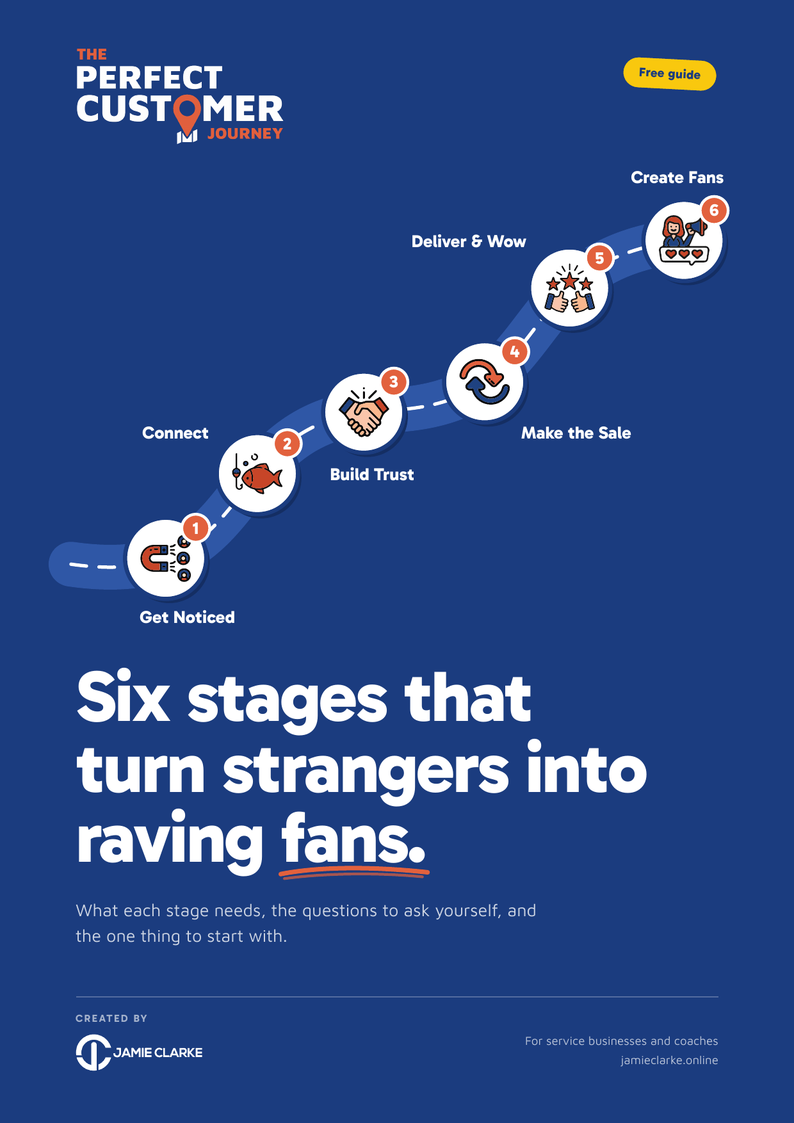
Mine is called the Perfect Customer Journey.
Six stages that take someone from never having heard of you to recommending you to everyone they know.
Get Noticed. Are the right people finding out you exist?
Connect. Are you getting their details so you can follow up?
Engage. Are you showing them you can help, before you ask them to buy?
Convert. Are you making it easy for them to buy from you?
Deliver & Wow. Is the service so good it blows them away?
Create Fans. Are you making it easy for them to tell people about you?
Each stage earns you the right to move to the next.
Most businesses are doing two or three of them, and usually not in order.
They post on social media (Get Noticed) and then try to sell straight from the post (Convert), skipping everything in between, and then wonder why it feels like nothing’s working.
Do you have to use mine? No, not at all.
If you’ve got a framework that works, keep using it.
What matters is that you’ve got one.
2. Then get the foundations right
Once you can see the picture, the next job is the bit everything else sits on.
It’s not exciting and nobody claps for it.
It’s also why so much marketing goes nowhere.
Who you help, in their words.
Not “everyone”.
Something specific, said the way your customers say it, so if they say “I just want my phone to ring more”, you don’t put “lead generation solutions” on your website.
If you confuse, you lose (that one’s Donald Miller’s, not mine).
A website that does its job.
Can someone tell within five seconds what you do, who it’s for and what to do next?
Is there proof you’re good at it?
Is there a way to get in touch that actually works?
One place every enquiry lands.
Not some in your inbox, some on your phone and some in your head.
One place, so nothing gets forgotten and you can see who needs a follow-up.
Knowing what’s working.
Where your enquiries actually come from.
Not forty numbers on a dashboard, just enough to know what to do more of.
Get these wrong and everything you bolt on top leaks.
That’s why I tell people not to pay for ads until they know what they’re sending people to.
Ads make a working system work faster, and a broken one fail faster.
They don’t fix it.
3. Then build systems, one stage at a time
This is where marketing stops relying on you remembering.
A system sounds like a big techy thing.
It isn’t.
A system is just a job that happens without you having to think about it.
Something happens, and the next thing happens because of it.
Somebody downloads your guide, and they get a welcome email.
A quote goes out, and the follow-up is already booked in.
A job’s finished, and a review request goes out a week later with the direct link.
Say you run a dog grooming business.
One system per stage could look something like this.
Get Noticed: a before-and-after photo on Facebook every week, and your Google profile kept up to date.
Connect: a free “how often should my dog be groomed” guide on your website, mentioned at the end of every post.
Engage: a short monthly email with seasonal tips (muddy paws in winter, ticks in summer).
Convert: every enquiry answered the same day, and an easy way to book online.
Deliver & Wow: a reminder text the day before, and a photo of the dog sent to the owner before pick-up.
Create Fans: a review request the day after, with the link.
Nothing clever.
Six jobs that happen every time, whether you’re having a good week or not.
Because willpower is great on a Monday morning, but by Thursday afternoon, when you’re two dogs behind and one of them has rolled in something, it’s gone.
A system still turns up on Thursday.
There’s one rule though.
Automate the consistent, personalise the meaningful.
The welcome email can go out by itself.
The phone call after something big should come from you.
4. One bridge at a time
This is where most people come unstuck, so I want to be really clear.
You don’t build all six at once.
Most businesses I look at have a collection of half-built bridges (I’ve got plenty of my own, don’t worry).
An email list with no emails going out.
A social account that went quiet after three weeks.
A free guide nobody’s ever heard of.
A half-built bridge doesn’t get anyone across, however good the half is.
So pick the stage that’s leaking most.
Build that one system.
Finish it, all the way to the other side, and only then start the next.
It doesn’t need to be perfect.
Version one always beats version none.
Not easy. Easier.
None of this makes marketing easy.
But when you can see the picture, the foundations are solid and the systems are doing the remembering, the overwhelm fades.
Not completely, but enough.
Enough to sit down on a Monday morning and know exactly what to work on.
Your job today
Grab a bit of paper and write out the six stages.
Next to each one, write what you do now.
Put a tick next to anything that happens by itself, without you having to remember it.
Find the first stage that’s blank, or has no tick. That’s your first bridge.
Want a second pair of eyes?
If you’d rather someone looked at it with you, that’s what Your Web Review is for.
I go through your website, Google profile, reviews and socials, record a video of me doing it, and give you the three things I’d fix first.
No big sales pitch.
And if you’d like one short email every Sunday on making your marketing easier, get the Marketing Memo. It’s free.
Free Guide · 14 pages
The Perfect Customer Journey: A Plain English Guide
See your whole marketing on one page, and spot the stage you're missing.
By signing up you agree to receive marketing emails. Unsubscribe anytime. Privacy policy.
It's on its way! Check your inbox in the next few minutes.
Something went wrong. Please try again.
Want me to look at yours?
I'm Jamie. I help coaches and small business owners turn their website and marketing into a steady stream of enquiries. Grab a free web review and I'll show you your quickest wins, no big sales pitch.