
The 12 Week Year: Book Review
My review of The 12 Week Year. Why planning in 12 weeks instead of 12 months gave me the urgency I was missing, and the one idea from it I use every week.

Jamie Clarke
9 March 2026 · 5 min read
Are you tired of making New Year’s resolutions that you never keep?
Do you feel like you’re always behind and never quite caught up?
At the time of writing this, that’s me for sure, but it won’t be for much longer.
I’ve just read a book that has totally changed my mindset, and although I’ve only been using it for a week or so, it’s already had a big impact.
The 12 Week Year is about concentrating only on what’s important for the next 12 weeks, instead of giving yourself a whole year to get it done.
The book is split into two halves.
The first half is all about why the 12 Week Year works and why you should use it.
The second half is the practical bit, with tips, tools, templates and checklists for actually putting it into practice.
If you struggle with working on the right things and getting them done, I’d highly recommend it.
Redefining the year
The whole idea of the book is that you redefine your year.
Annual goals and plans get in the way.
Sure, they’re better than no plan at all, but if you only look at them once a year you’re not going to get the best results.
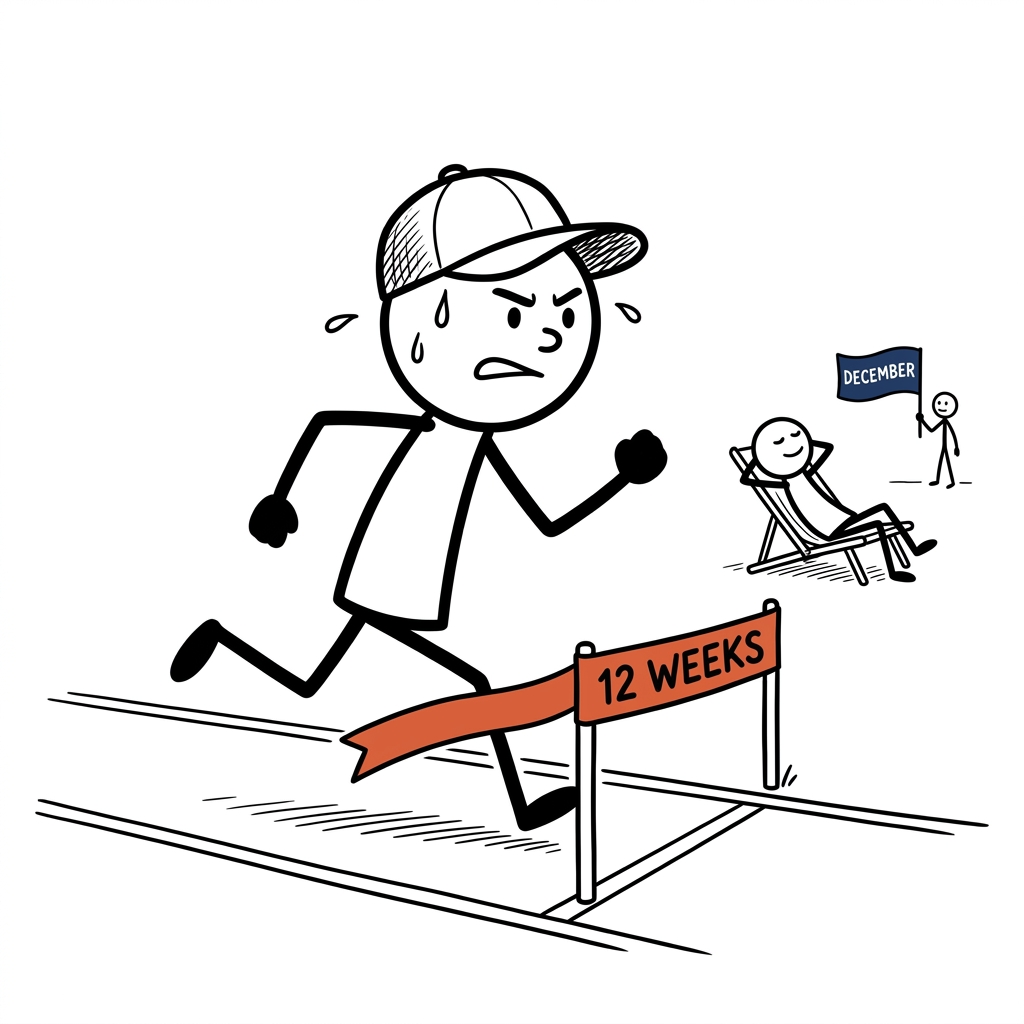
You set your goals in January and you’ve got until December to hit them, which isn’t exactly going to fill you with urgency.
So you set your goals in Jan, you’re already behind in Feb, and that annoys you, but you’re not overly worried because you’ve still got 10 months, right?
April comes round. Not to worry, still got 8 months to catch up…
…and on it goes.
There’s no urgency at all, and we forget that every week, every day (every minute, if you want to be dramatic about it) counts.
We need to be taking action every week, scrap that, every day.
Not just every month or every quarter.
Now think about what most of us do in the last month or two of the year.
We have a BIG push.
We work later to finish the project we planned all the way back in January, we run the “end of year sale” to hit the revenue goal, and that final month or two makes or breaks the whole year.
Imagine if you had that urgency every 12 weeks?
“There’s nothing like a deadline to get you motivated.”
And if you’ve had a bad year, you know what happens next.
January’s here again, so we can put right everything that went wrong last year.
Had a good year? Great, let’s push the goals up for the year ahead.
“It’s important to understand that the results that you achieve are a direct byproduct of the actions you take.”
The basic concept is simple: 12 weeks becomes a year, a week becomes a month, and a day becomes a week.
“The best thing about the future is that it comes one day at a time.” Abraham Lincoln
Why the short term matters
Focusing on what’s important for the next 12 weeks is a much better way to hit your goals than waiting for next year.
It means you’re working on what matters now, instead of worrying about everything that needs doing later.
If you want to give it a go, pick up a copy of the book here.
How to make your 12 Week Year work
A few tips to keep you on track:
- Write down what you need to get done in the next 12 weeks, plus the steps it’ll take to get there.
- Set yourself a schedule and stick to it.
- Set up somewhere to work that actually helps you get things done, whether that’s a corner of the house, the office or the right tools on your laptop.
But my biggest takeaway from the book is this.
You don’t really have control over the outcome of your goals.
Say one of your goals for your first 12 weeks is to turn over 50 grand.
You can’t actually control that money coming in (you can’t just walk up to someone and take it out of their pocket).
What you DO have control over are the actions you take every day and every week to get there.
So to hit that goal, your actions might be:
- Make 20 sales calls a day
- Write 5 new blog posts a week
- Follow up with every lead, every day
Them things are in your control.
The trick is to pick actions that, if you do them, make it really likely you’ll hit the goal.
And if you don’t hit it? Fine, look back at the actions you picked and work out why they didn’t get you there.
You get to do that every 12 weeks, not every 12 months.
So, is it worth reading?
Yea, I’d recommend it to anyone who wants to stop waiting for next year and start focusing on what needs to happen in the next 12 weeks.
The thing that’s stuck with me is that we don’t control the outcome, we only control our actions, so pick the right ones, stick to them, and be honest with yourself when they don’t work.
It can feel daunting cramming that much into such a short space of time, but there’s prob stuff you’ve been putting off for months that needs doing anyway.
Don’t be scared of it.
Focus on what’s important now and you’ll have a much better year.
Well, 12 weeks!
The 12 Week Year by Brian P. Moran and Michael Lennington is a winner for me.
Want a fresh pair of eyes on your 12 weeks?
If you’re not sure what your marketing should be working on first, Your Web Review is a good place to start. I look at your website, Google profile, reviews and socials, record a video going through it all, and give you the three things I’d fix first.
No big sales pitch.
And if you’d like one short email every Sunday on making your marketing easier, get the Marketing Memo. It’s free.
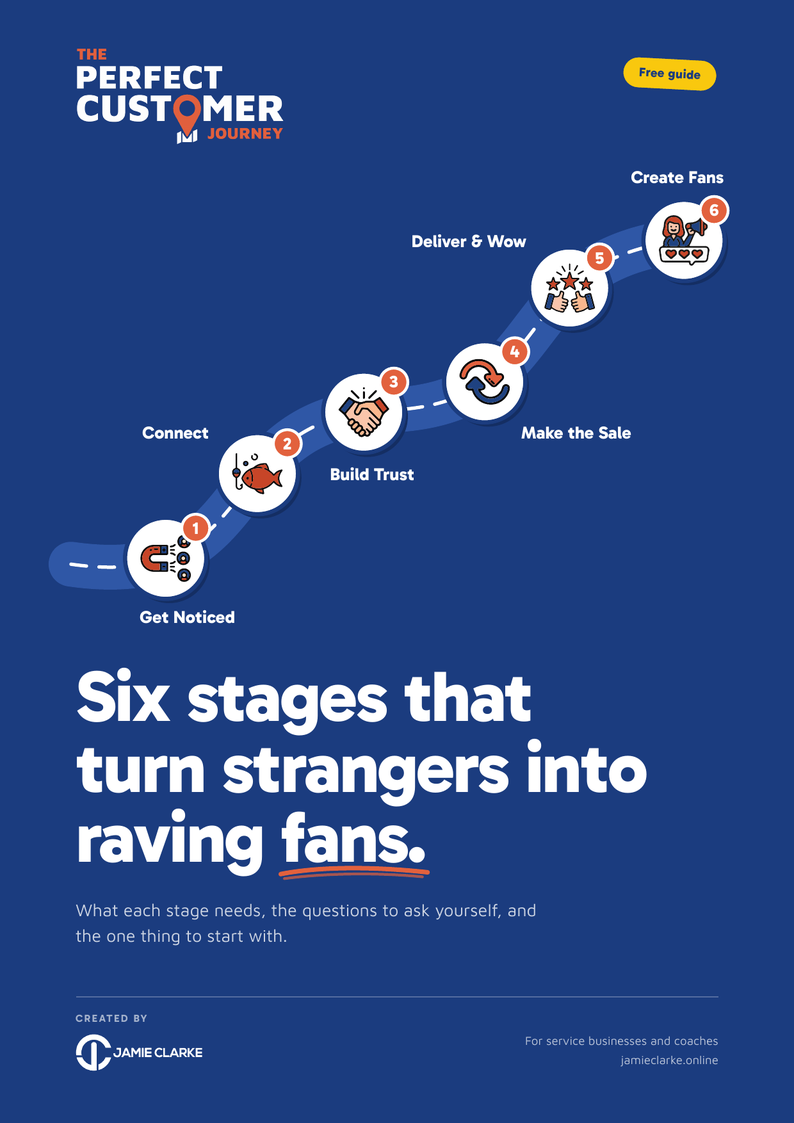
Free Guide · 14 pages
The Perfect Customer Journey: A Plain English Guide
See your whole marketing on one page, and spot the stage you're missing.
By signing up you agree to receive marketing emails. Unsubscribe anytime. Privacy policy.
It's on its way! Check your inbox in the next few minutes.
Something went wrong. Please try again.
Want me to look at yours?
I'm Jamie. I help coaches and small business owners turn their website and marketing into a steady stream of enquiries. Grab a free web review and I'll show you your quickest wins, no big sales pitch.