Your Messaging Is Your Foundation (Get It Wrong and Nothing Else Works)
You can have the best marketing plan in the world, but if your message is muddled, none of it lands. Here's how to say what you do so people get it fast.

Jamie Clarke
20 March 2026 · 5 min read
One thing I talk about a lot is strategy.
Your strategy is SUPER important, and you can have the best one in the world, with The Perfect Customer Journey mapped out stage by stage, every tactic in place and everything connected.
But, if your messaging is wrong, none of it lands.
Your message is what your website says.
It’s what your emails and your social posts say.
It’s the words you use when someone asks “so what do you do?”
And most businesses get it wrong.
They’re not bad with words, they’re just talking about the wrong things.
The biggest messaging mistake
Here’s what happens.
You sit down to write your website, or your social bio, or a follow-up email.
And you start with what YOU want to say.
Your qualifications, your process, your experience, your “unique approach”.
The problem?
Nobody cares. Not yet, anyway.
Your customer doesn’t care about your process, they care about their problem.
They want to know one thing: do you understand what I’m going through, and can you fix it?
That’s the whole conversation at the start.
If you lead with your features instead of their problem, you’ve lost them.
They’ll read “we deliver tailored, results-driven outcomes using our proprietary methodology” and their eyes will glaze over.
But if they read “this is why your marketing isn’t working, and here’s how to fix it”, they’re in, because you’re talking about their world, not yours.
Clear beats clever, every time
I see businesses tie themselves in knots trying to sound clever.
Fancy taglines, wordplay, big statements that don’t actually say anything.
“Transforming businesses through strategic partnerships.”
What does that even mean?
Nothing.
It sounds like it might mean something, but it doesn’t.
Now say you’re an accountant, and compare it to: “I sort your accounts so you can get on with running your business.”
Not clever, not fancy, but crystal clear.
You know exactly what they do, who it’s for and what you get out of it.
Clarity wins…
…every single time.
As Donald Miller says, if you confuse, you lose.
The moment someone has to work to understand what you do, they’ve got twenty other tabs open and a business to run, so they’re not going to sit there decoding your website - they’ll just move on.
Make it obvious.
Say what you do in words a twelve-year-old would understand.
Your message has three jobs
1. Say who you help.
Be specific. “Businesses” says nothing, “small businesses in the UK” is better, and “tradespeople in Yorkshire” is better again.
The more specific you are, the more the right people think “that’s me”.
2. Say what problem you solve.
In their words, not your industry’s.
“Dreading your tax return?” is a problem people actually feel.
“Suboptimal financial management” is something nobody has ever said out loud.
3. Say what changes for them.
What does life look like after working with you?
More enquiries? More confidence? A system that runs without them having to think about it every day?
If your homepage does those three things clearly, it’s doing its job.
If your social bio does them, people know whether to follow you, and if your answer to “what do you do?” does them, the person at the networking event knows whether to ask for your number.
Use their words, not yours
This is where most businesses trip up.
You know your customers.
You’ve had the conversations.
You know what people are struggling with and what they actually want.
And then you sit down to write your website…
…and it comes out in corporate-speak anyway.
As if there’s some rule that says your website has to sound different to how you talk to customers.
There isn’t.
If your customers say “I just want more enquiries”, your website should be about getting them more enquiries, not “optimising your lead generation pipeline”.
Their words go on the page.
When someone reads your website and thinks “they get me”, you’re already a step ahead of everyone else they’re looking at.
Test it on a real person
Here’s the simplest test there is.
Read your homepage out loud to someone who isn’t in your industry (a mate, your mum, your partner).
Then ask them three things.
What do I do?
Who do I do it for?
Why would someone pick me?
If they can answer all three, your message is working.
If they look confused, or repeat back some vague version of what you said…
…it needs work.
Don’t test it on people in your industry, test it on normal people, because that’s who your customers are.
Keep it the same everywhere
Once you’ve nailed it, use it everywhere: your website, your socials, your emails, your quotes and your conversations.
Not word for word (you’re not a robot), but the same problem, the same result and the same kind of language.
When someone sees your Facebook post and then visits your website, it should feel like the same person talking to them.
If your socials sound chatty and helpful but your website sounds corporate and stiff, people notice, and it chips away at their trust.
The mistakes I see all the time
Leading with features. Nobody cares about your process until they believe you understand their problem.
Trying to sound clever. Clear beats clever.
Using jargon. If your customer wouldn’t use the word, neither should you.
Being vague. “We help businesses grow” says nothing.
Saying something different everywhere. Your website says one thing, your socials another, your emails something else.
Why it matters so much
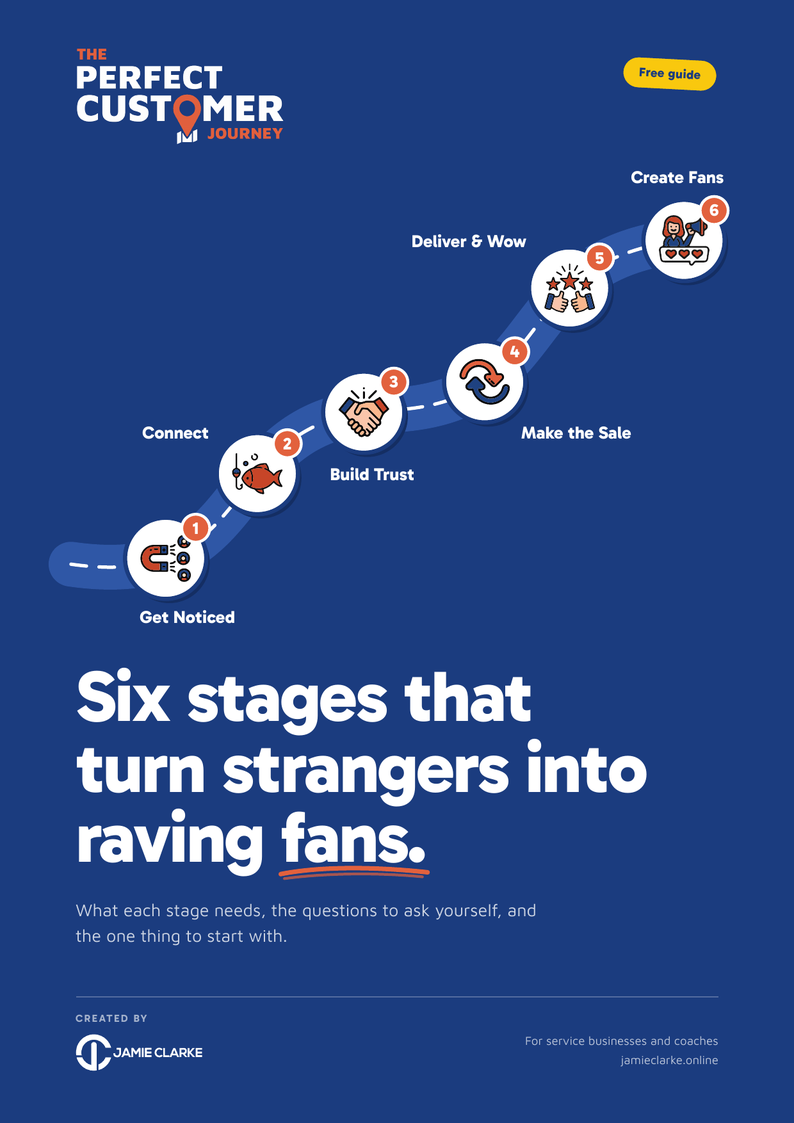
Your message sits underneath EVERYTHING in The Perfect Customer Journey.
Stage 1 (Get Noticed) only works if the right people see you AND understand what you do.
Stage 2 (Connect) only works if your offer is clear enough for someone to hand over their details.
Stage 3 (Engage) only works if people feel like you get them.
A muddled message doesn’t just make one stage weaker, it makes all of them weaker.
Get it right and everything else gets easier.
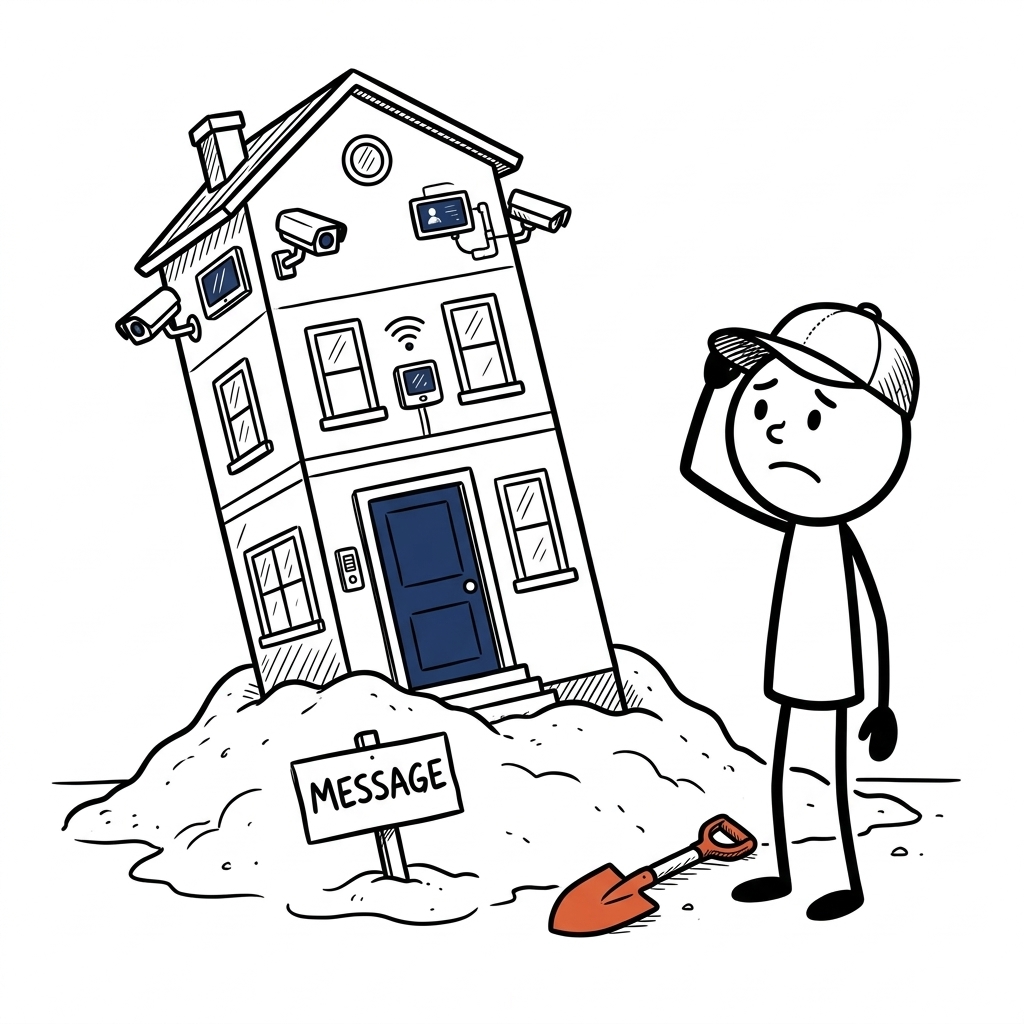
Get it wrong and you’re building on sand.
Your job today
Write down, in one sentence each, who you help, what problem you solve and what changes for them. Use your customers’ words, not yours.
Then open your website. Does it say those three things clearly? If not, that’s your next fix.
Want a second opinion?
If you’re too close to your own words to see them clearly, that’s what Your Web Review is for. I look at your website, Google profile, reviews and socials, record a video going through it all, and give you the three things I’d fix first.
No big sales pitch.
And if you’d like one short email every Sunday on making your marketing easier, get the Marketing Memo. It’s free.
Free Guide · 14 pages
The Perfect Customer Journey: A Plain English Guide
See your whole marketing on one page, and spot the stage you're missing.
By signing up you agree to receive marketing emails. Unsubscribe anytime. Privacy policy.
It's on its way! Check your inbox in the next few minutes.
Something went wrong. Please try again.
Want me to look at yours?
I'm Jamie. I help coaches and small business owners turn their website and marketing into a steady stream of enquiries. Grab a free web review and I'll show you your quickest wins, no big sales pitch.