
What Should a Website Actually Cost? (What You're Really Paying For)
Ask five people what a website costs and you'll get five wildly different numbers. Here's what actually drives the price, and the questions that expose a quote.

Jamie Clarke
17 June 2026 · 4 min read
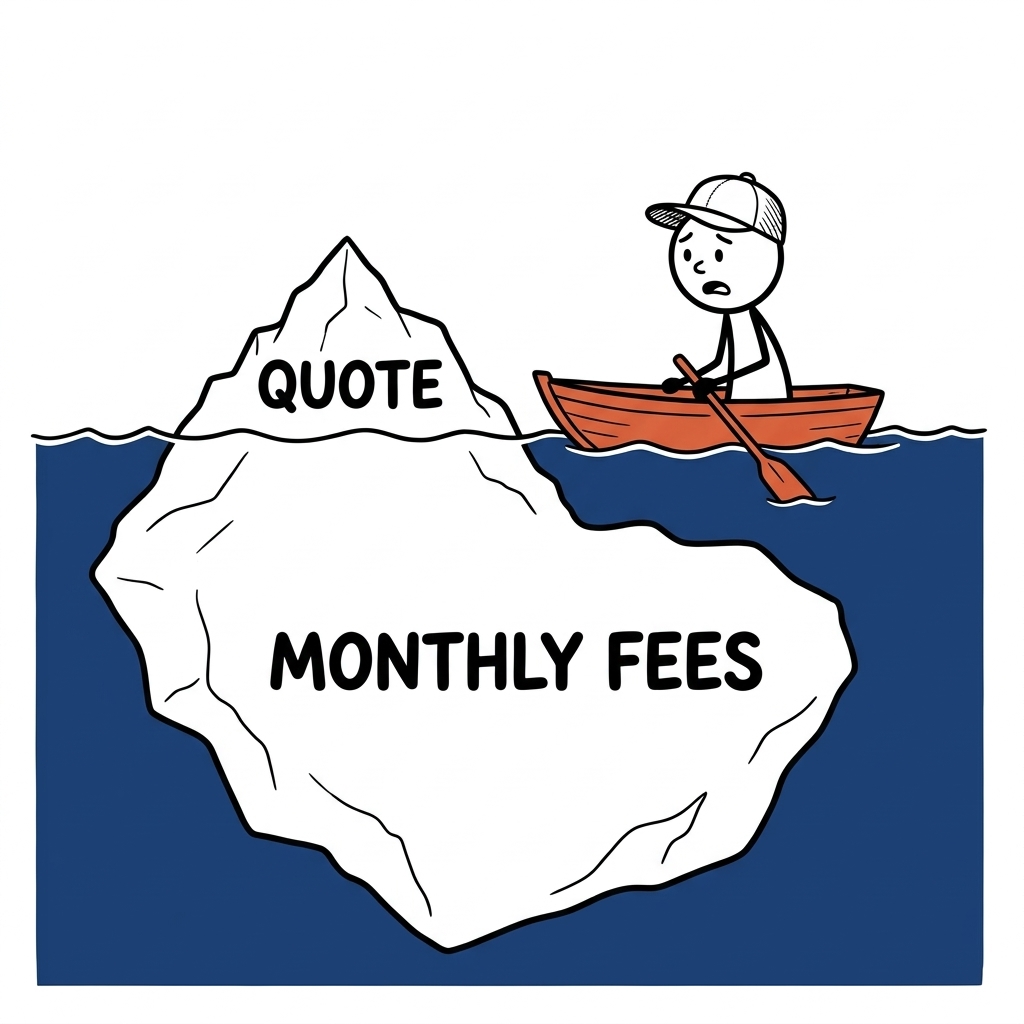
Ask five people what a website costs and you’ll get five completely different numbers.
A bloke on Facebook, a local freelancer, a city agency with a fancy office, and nobody explaining why one quote is fifty times the other.
So I’m not going to give you a number.
Everything is expensive without context, and the number on its own tells you almost nothing.
What I can tell you is what you’re actually paying for, so you can look at any quote (including mine) and know what’s in it.
(I build websites, so I’m not neutral, but I’ll keep it as straight as I can.)
A quote is three costs stacked on top of each other
The build. The design, putting it together and getting it live.
The thinking. The message, the words, the structure, what happens when someone lands on the page and how they get from there to picking up the phone - the bit that makes a website win you work instead of just sitting there.
The business model. This is the one to watch. Some people price low up front and make their money on hosting fees, maintenance plans and charging you every time you want a phone number changed.
Cheap quotes usually skip the thinking and make it back on the business model.
Expensive quotes sometimes include proper thinking, and sometimes just include a nicer office.
What pushes the price up (and down)
How much thinking is included. If you’re expected to write all the words yourself, the quote will be lower, but you’re doing the hardest part of the job.
What it has to do. A simple site that explains what you do and gets people to enquire is one thing, and booking systems, client logins, online shops and multiple locations are another, because every one of them adds real work.
What it’s built on. Some platforms need plugins, updates and someone keeping an eye on them every month, and that cost has to land somewhere (it’s a big part of why I moved away from WordPress).
What happens after it goes live. Monthly fees, hosting, care plans, charges for small changes. Add them up over three years, not one.
Who you’re likely to be talking to
DIY builders and the mate who “does websites”. Fine as a placeholder. The hidden cost is that it often reads like a template, nobody’s thought about how it turns visitors into enquiries, and you end up rebuilding it properly later anyway.
The template trade. Your logo and words dropped into a ready-made theme. It exists, Google can find it, and sometimes that’s enough, but there’s rarely any time in the price to think about your customers.
Someone who does the thinking as well as the build. This is where most solopreneurs, coaches and service businesses should be looking, because it’s where the words, the structure and the enquiries get proper attention.
Agencies with account managers. Sometimes worth it for big organisations with committees and sign-off processes. For a small service business you’re often paying for the people in the middle.
The questions that expose a quote
Whoever you’re talking to (me included), ask these.
“What are the monthly costs, forever?” A cheap site with a monthly fee can easily cost more over three years than a dearer one with none.
“Who writes the words?” If the answer is “you send us the text”, the thinking isn’t included, and the thinking is what wins you work.
“What happens if we part ways?” If you can’t take the site, the domain and the content with you, you don’t really own it.
“How will we know it’s working?” If the answer doesn’t mention enquiries or calls, you’re buying decoration.
So what should you pay?
Say you run a small accounting practice.
A quote that’s mostly the build, with you writing the words and a monthly fee bolted on, might look cheap next to one that includes working out who your ideal clients are, what they’re worried about at year end and what makes them pick up the phone.
But only one of them is likely to bring in work.
So the honest answer is: pay for the thinking, own everything, and know exactly what you’ll pay every month after it goes live (ideally nothing you didn’t choose).
And if the price is high, you should be able to point at exactly what the extra is buying.
Before you spend anything
Sometimes the site you’ve already got doesn’t need replacing at all, it needs three fixes.
That’s what Your Web Review is for. I go through your website, Google profile, reviews and socials, record a video talking it through, and give you the three things I’d fix first, and if that means you don’t need a new site, I’ll tell you.
No big sales pitch.
And if you’d like one short email every Sunday on making your marketing easier, get the Marketing Memo. It’s free.
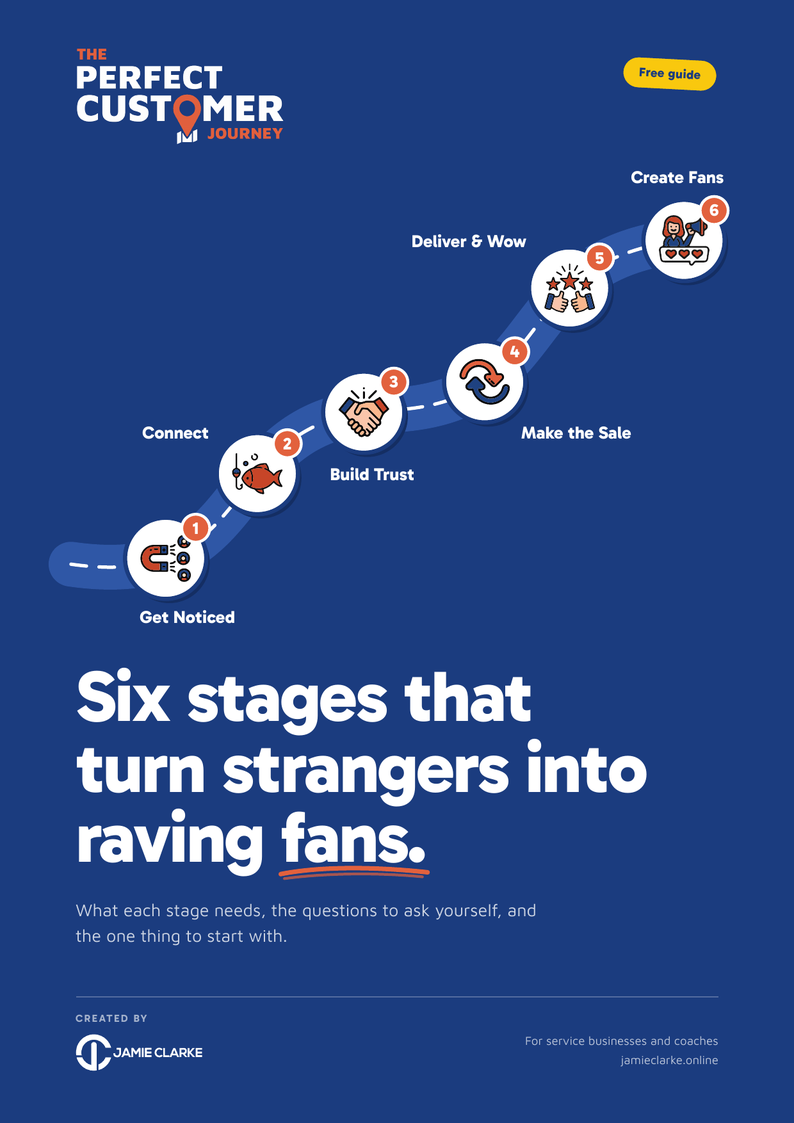
Free Guide · 14 pages
The Perfect Customer Journey: A Plain English Guide
See your whole marketing on one page, and spot the stage you're missing.
By signing up you agree to receive marketing emails. Unsubscribe anytime. Privacy policy.
It's on its way! Check your inbox in the next few minutes.
Something went wrong. Please try again.
Want me to look at yours?
I'm Jamie. I help coaches and small business owners turn their website and marketing into a steady stream of enquiries. Grab a free web review and I'll show you your quickest wins, no big sales pitch.